


If 2023 and 2024 felt like the years we were getting accustomed to AI tools and large language models (LLMs), 2025 was the year it became mainstream for every business to use them. What we’ve witnessed is an explosion of the volume of content produced, but somehow, most brands seem to have lost their spark. Somewhere along the way, the content we’ve seen on blogs, emails, and even socials started to feel generic, same-same, and emotionless – feeling, precisely, as if it had been written by a robot… because it probably was.
So where did we go wrong? While technology advances should be helping us become even more effective with our content marketing efforts, it seems like we’ve actually taken a step back by relying on them too much and forgetting to be human.
#1 The online content overload is real
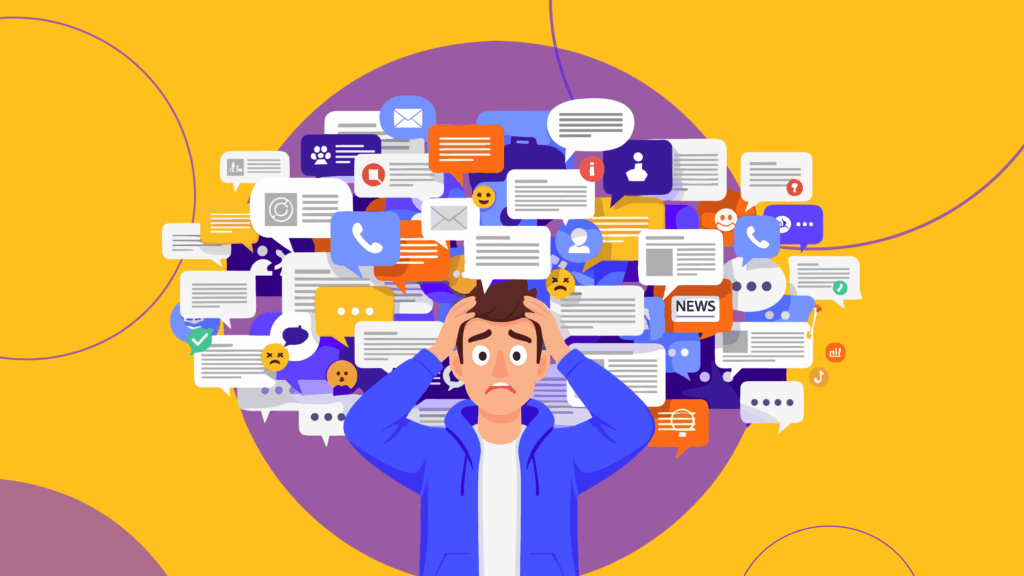
With the help of LLMs, it has become easier than ever to put out content. Scripts for YouTube videos, hooks for viral Reels, catching headlines for blog posts – you can use AI to workshop your content ideas, and in some instances, AI can even produce the entire piece of content for you. So yes, it’s easier than ever to put out content, but it’s also harder than ever to cut through the noise in the online world.
#2 Volume without strategy leads nowhere
With our newfound ability to generate endless streams of copy, the temptation to “just produce more” is enormous. But what we’ve learned is that volume alone no longer works. Inboxes are overflowing, social feeds are saturated, and audiences have become painfully immune to robotic messaging. You can flood the internet with AI-generated posts, but if your brand voice is generic, you’re still invisible.

#3 We developed a 6th sense for AI-generated content
With AI-generated content flooding our feeds, we’ve become very well attuned to what AI content feels and reads like. We shudder at the sight of an em-dash (even though I still use them), cringe when we see examples coming in threes, and can just tell when a piece of content feels too “polished” or “vanilla” to be written by a human with unique thoughts and perspectives.
I now find myself getting excited at the sight of a typo, sighing with relief that my favourite brand or online creator hasn’t used AI to produce or spell-check their post. So while I’m not suggesting you fill your content with unnecessary typos and spelling mistakes, I would definitely advise you to trust your gut rather than asking ChatGPT to rewrite all of your content. Keep it human, keep it real.

#4 Brand personality is non-negotiable
This year made it crystal clear: robotic voices no longer cut through the noise of online content. Even polished, error-free content can feel flat and forgettable. The brands that stand out are those with distinct, human voices and full of quirks, insight, and unexpected angles.
More than ever, brands will benefit from investing in developing their unique voice. What’s your tone of voice? How do you speak to your audience? What is the unique positioning of your brand? Its unique opinions? How can you build a brand people will remember?
Craft content that stands out and that doesn’t feel like it’s been written by AI. Remember, you don’t need to please everyone, but you do need to be remembered by the customers who matter.

#5 Always add value beyond AI
Here’s the bottom line: if your content doesn’t offer something only real humans (not robots) can contribute, it’s not enough. ChatGPT can write a blog, sure. But it can’t inject lived experience, a unique worldview, or that subtle spark that makes readers feel something. In 2025, successful content isn’t about beating AI at scale. It’s about using AI to help you fine-tune, but keeping the heart of your content human, relatable, and full of real stories your audience can relate to.
Here are some content ideas that clearly show you’re a human-led brand:
- Showcase real stories: customer success stories, behind-the-scenes moments, or even the struggles and lessons learned along the way. Even your challenges, pivots, and failures are worth sharing. Vulnerability builds trust and makes your brand relatable.
- Use real humans: get your employees, founders, or community members on the gram! Ask them to share their perspective and personality. They will share quotes, anecdotes, and insights that feel lived and can’t be AI-generated.
- Highlight process over product: show how your products are made, your team brainstorming, or your day-to-day workflow. People love to see effort and go with you on that journey.
- Show your brand values in action: document your brand taking real action on social or environmental issues, not just posting generic, people-pleasing statements.
- Create interactive experiences: utilise polls, challenges, quizzes, or user-generated content campaigns that invite real humans to participate.
- Experiment with different formats: try audio notes, handwritten letters, live streams, or candid Instagram Stories that feel extra human and that no AI could replicate.
- Add humour and quirkiness: little jokes, inside references, or playful storytelling make content uniquely yours. AI can mimic humour, but human nuance is different.
- Embrace imperfection: hey, why not include a small typo here and there, a slightly messy shot, or an unscripted moment to show how authentic you really are 😉
In the same way that we’ve developed a 6th sense for AI-generated content, we’ve also developed a 6th sense to spot content that took effort beyond feeding ChatGPT a prompt. If you put in the effort to interview your customers, create heart-led content, and amplify stories that matter to you, it will be noticed and go a long way in making your brand memorable.

What’s now? The world is craving authenticity in 2026
So what’s next? We can only expect the trend toward ultra-human content to accelerate in 2026. Brands that fail to invest in authentic storytelling will increasingly rely on paid amplification to be seen, but even that has diminishing returns.
Of course, you should utilise AI in 2026. But save AI capabilities for repetitive tasks, fine-tuning, and maybe the initial brainstorming (if you must). But please, create from the heart, that one thing AIs can’t replicate just yet.